
^ Listen to this article
Recognizing when we need help most
The whirring of the helicopter blades broke the silence of the wilderness where I was backpacking. Search crews were looking for a Navy SEAL who had been missing for three days. Other hikers who'd spotted him said he seemed disoriented, unaware that he was hiking aimlessly without supplies, and unwilling to stay put.
I was enjoying the coolness of an alpine lake, a relief for my swollen feet after a hike up to 11,000 feet, when I met him. His shirt and face were clean, he looked rested - not like someone who'd been lost without food or shelter for three days. But I knew this was the missing man. And, that’s the moment when I felt a sense of obligation for his well-being - a sense that I had to keep him at my camp long enough for Search and Rescue to arrive. Though he had refused to stay with other groups, he agreed to join me and my two friends for tea.
I focused on him feeling at ease rather than trying to fix anything or ask him questions about how he got separated from his adult daughter. (I got lost in the wilderness once, and I felt for him.) But I was also scared. The last thing I wanted was for a Navy SEAL, twice my size, to perceive that I was forcing him to stay. I was caring for him, but I was also using a lot of energy to manage my anxiety.
After eating some food, he said "Thanks for everything, but I have to get to a business meeting," and without a pause, I said "Because it’s such a nice day, your business meeting was rescheduled." He stared at me for a long moment and I stayed with his eyes. Something shifted in that moment, and we both seemed to let go.
It’s a lot easier to teach equanimity, as I do in my
programs, than it is to embody it when the mind is running in all sorts of directions, but I managed to stay focused on my inhales and exhales rather than my fearful thoughts. When the paramedics finally arrived, the lost hiker could answer questions about his past but wasn’t aware of where he was or where he was headed.
The stronger our self-image as someone who "has it together," the harder it becomes to acknowledge when we're genuinely lost.
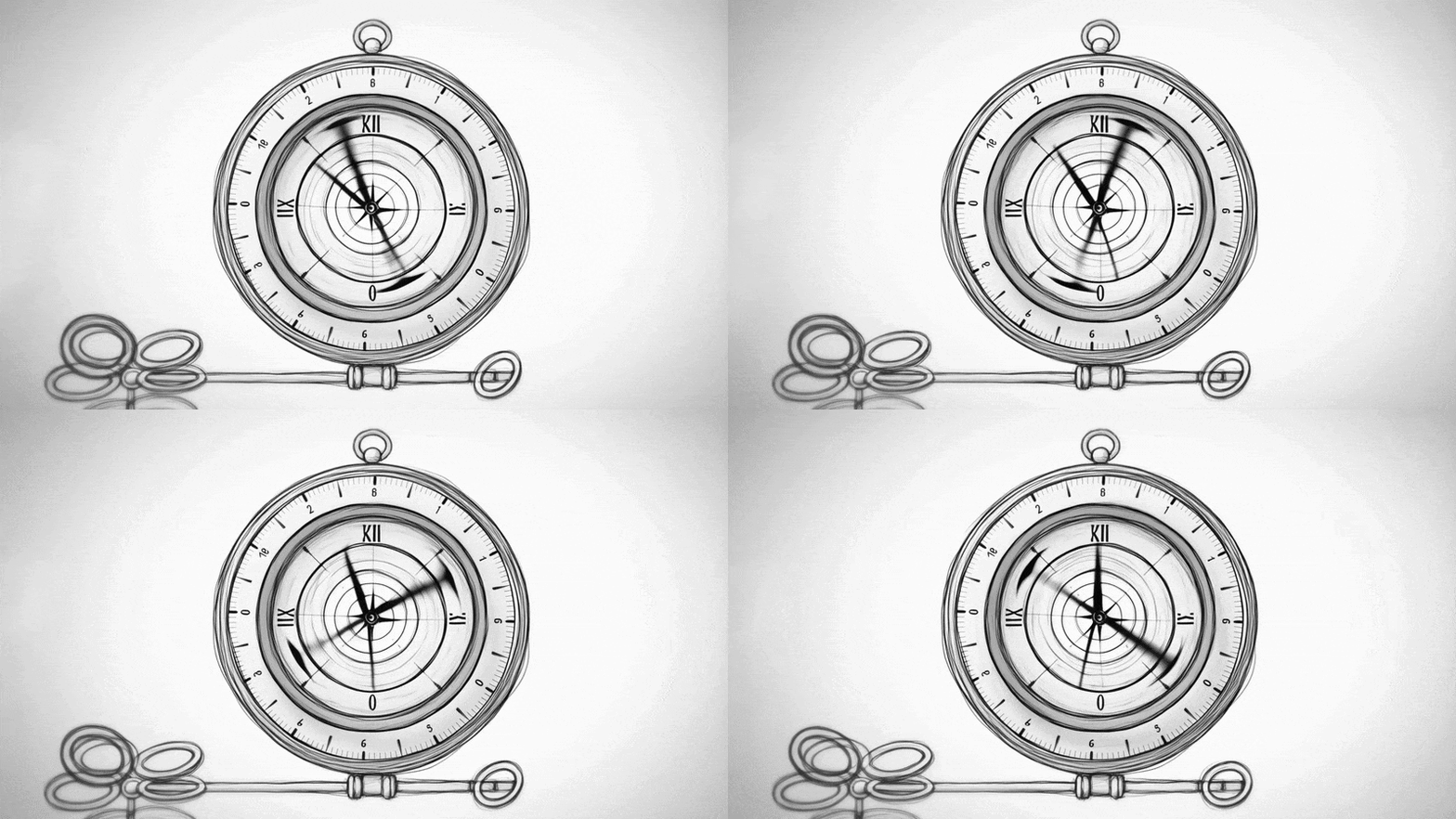
This same pattern shows up with money all the time. The more we make assumptions that our finances are just fine, the more difficult it becomes to admit when we need an objective perspective. This is where a financial advisor can help—or even a spouse or business partner who can share their sense of your financial blind spots.
Meditation practices, especially the forms that cultivate awareness and presence, offer another way to notice when we’re drifting off course.
Asking for help isn’t easy. Money represents survival. We become aware of its significance during the fragility of adolescence when we realize we’ll have to make it on our own some day. When we reach adulthood, it takes maturity to say "I might benefit from some guidance."
This week, consider one area where you might benefit from help you've been avoiding. Then reach out to someone whose perspective you trust, even if it feels uncomfortable. Being vulnerable requires courage, but it's often how we find our way.
Share this post:
Subscribe to the Prosperity Letter
Follow me on:
The road to financial freedom is easier when you share the journey. By signing up for Spencer’s newsletter, you’re joining a growing community of people who’ve found their way to “Enough.”

Blog Detail Page Newsletter
FEATURED POSTS